
TWO NATURAL GAS POWER PLANTS AND PIPELINES IN VERMONT |
|
There are 57 proposals to build natural gas power plants in New England. (See Interconnection Study Status ) If all these power plants are built, they would produce more than 30,000 megawatts of power. Planners say there is a need for about 1/4 that much new power. In the utility industry, this explosion of proposals to construct natural gas power plants is called "the gold rush". Those that are completed will be enormously profitable for their investors. |
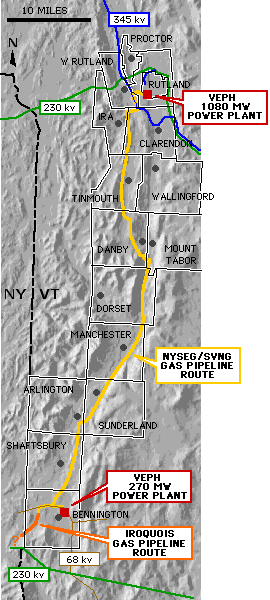
The project proposed for Southwestern Vermont is not a single project but rather several interconnected projects.
 A the core of this project are the two natural
gas fired electric generating plants to be built by
Vermont Energy Park
Holdings (VEPH). These include a combined-cycle
1080 MW plant in Rutland,
and a combined-cycle
270 MW plant in Bennington. (VEPH is
also building a third 810 MW plant in Glenville, NY, which will
be supplied with natural gas from the Iroquois pipeline.)
A the core of this project are the two natural
gas fired electric generating plants to be built by
Vermont Energy Park
Holdings (VEPH). These include a combined-cycle
1080 MW plant in Rutland,
and a combined-cycle
270 MW plant in Bennington. (VEPH is
also building a third 810 MW plant in Glenville, NY, which will
be supplied with natural gas from the Iroquois pipeline.)
Natural gas will be supplied to these plants by two connected
natural gas pipelines. The first will
extend from the Albany, NY, area to
Bennington and will be built and operated by
Iroquois Gas. The second,
built and operated by
Southern Vermont Natural Gas
(SVNG), will connect to the Iroquois line and deliver gas to both
the Bennington and Rutland plants.
Although the proposed pipelines will be built
initially to supply natural gas to the several
VEPH powerplants, they are part of a long range,
10-year plan to expand lines for future gas
distribution systems throughout Vermont and into
Massachusetts.
(See 09/30/98 Notes)
Local service is planned for about 7,500 industrial, commercial
and residential customers served by about 458 miles of distribution
pipeline. However,
how much gas might be immediately
available for distribution, and to whom, remains
unclear. NYSEG/SVNG has stated that any gas
available over what the power plants will use (an
estimated 15% of pipeline capacity) will be sold
where economically feasible
, beginning with
large industrial customers, then commercial, and
finally residential. NYSEG has not quoted any
prices to show what Vermonters might expect to pay
for natural gas in their homes.
A fourth, and poorly addressed, aspect of the project is the construction
of the connections between the generating plants and the New England power
grid. Although the plant sites were picked for their proximity to existing
transmission lines, connecting plant to grid will require 1 to 2 miles of new
powerline construction, particularly in Rutland. A related question is whether
the existing transmission lines, both in Rutland and in Bennington, are
currently adequate to carry the projected output of the plants. VEPH claims
they are, others suggest that they may not be; neither position has been
substantiated.
| COMPANIES | BENNINGTON PLANT | RUTLAND PLANT | PIPELINES | TRANSMISSION |
Revised: November 21, 1999