|
|
||||
|
|
A weekly column addressing Vermont clean energy and clean environment issues. | ||||
| Monday, January 24, 2000 | |||||
| Natural Gas is Cheap and Abundant. OR IS IT? | |||||
| by Annette Smith (Executive Director of Vermonters for a Clean Environment, Inc.) | |||||
|
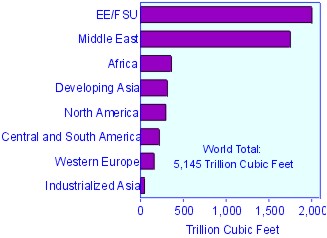
The high price of oil has been in New England news lately. But the high price of natural gas has also made headlines: "Natural gas prices highest since '86" according to the National Post of Canada. In New York and New Jersey, the recent cold snap has sent natural gas usage soaring to record highs. Con Edison customers used 16.5 percent more natural gas than their previous record-setting day ( "As The Thermometer Plunges, Gas Usage Soars"). Wisconsin Gas Co. just advised more than 300 industrial customers that cold temperatures might force the utility to turn off natural gas to major gas users, warning them that they should prepare to switch to backup fuel systems under their "interruptible" contracts. This is a significant factor in the increase in the price of oil for consumers ( "Wisconsin Natural-Gas Supplies May Be Cut in Cold Snap, Factories Warned"). On Thursday, January 20, 2000, a report issued by Arthur Andersen and Cambridge Energy Research Associates says the demand for natural gas in the power generation sector is expected to grow four to six times faster in the next decade than in the 1990's, creating the need for major new investments in exploration, production and pipeline projects ( "Need for 'Unprecedented' Gas Investment Seen"). "This growth in demand will test supplies available throughout North America, as well as the capital investment needed to find and deliver this gas, according to the report. The industry will be looking to new frontiers to supply this gas, as far afield as the North Slope of Alaska. To keep pace, the industry will need to find and develop as much as 300 trillion cubic feet of new gas reserves in the United States and Canada during the next 10 years. That is about the size of reserves now" ( "Natural-Gas Use to See Fast Growth, Report Says"). VCE consulted a variety of sources, including the natural gas industry, the Department of Energy, and pro-environment organizations, to develop an understanding of the availability of natural gas and the long-term ability of supply to meet the growing demand. The natural gas industry is extremely sensitive about terminology. "Reserves" subdivides into a classification system that includes measured reserves, indicated reserves, inferred reserves, probable reserves, and possible reserves. (See www.naturalgas.org for definitions). Shedding all the jargon, their position seems to be that there is plenty of natural gas in the world and it is only a matter of time and technology before the industry is able to make it available. When asked by Vermonters at public hearings, New York State Electric & Gas employees said that gas supply was 100 to 200 years.The Department of Energy and other sources seem to be in general agreement that proven gas reserves in North America are 300 trillion cubic feet (Tcf), as shown in the chart from the Energy Information Administration (EIA) below:
In 1997, the United States consumed 27% of the world total or 21.3 Tcf, and soon this country's average annual consumption of natural gas is expected to be 30 Tcf. At that rate, proven North American reserves will be used up in 10 years. The natural gas industry optimistically estimates that after subtracting the EIA estimate of proven reserves, U.S. unproven technically recoverable gas resources are 1,094 Tcf, or even as high as 1,135 Tcf. If that is true, natural gas supply would extend for 37 more years, for a total of 47 years, assuming the rate of consumption of 30 Tcf/year stays the same. But all is not well in the world of natural gas drilling and exploration. Gas fields in the United States and Western Canada have matured and their production is declining. The reserve life for natural gas in Western Canada's basin has declined over the past decade, falling from 30 years' production to about 10. Despite a 50% rise in U.S. drilling activity levels since April, natural gas production is still down from last year. In addition, more than normal amounts of gas are being pulled out of storage in the U.S. and Alberta, and pipelines leaving Western Canada are still not filled to capacity.One reason exploration is down is because the price of gas has been low. In order to fuel new exploration, natural gas prices will have to rise well above current levels. It is a delicate balance of expensive, long-term investment in exploration, declining traditional reserves, and recent prices too low to support exploration. New gas supplies from Sable Island off the coast of Nova Scotia and the Alliance Pipeline from Western Canada are cited as large new entries into the gas supply. But put in perspective, the Sable Island proven reserve is 3 Tcf, which would supply the United States for a little over a month. TransCanada PipeLine's plans to develop gas supplies north of the Arctic Circle would add 70 Tcf, enough to supply the United States for less than 3 years. The EIA estimates that there are 60 - 75 years' worth of recoverable resources. Whether the natural gas supply in North America is 10 years, 47 years, or 75 years, there is no question that beyond 10 years, the use of natural gas will depend on tapping into deeper and more difficult natural gas finds. Already, the Department of Energy is investigating the expansion of the Liquified Natural Gas infrastructure in order to make use of the extensive gas fields in the Middle East and the former Soviet Union. "Worldwide Natural Gas Supply and Demand and the Outlook for Global LNG Trade" [Energy Information Administration/Natural Gas Monthly/August 1997]. Why is United States' energy policy so eagerly embracing the short-term promise of natural gas? Surprisingly, the idea of an energy policy has given way to letting the marketplace rule. Natural gas is the fuel of choice for electricity generation because investors can make big profits quickly, building relatively cheap power plants in a short period of time. Natural gas turbines have been described as the "crack cocaine" of the electrical generation industry. They are a cheap short-term "fix" to our larger energy problems that are still unresolved. Politicians are sold on pretty emissions charts that show how clean-burning natural gas is compared to oil or coal, but neglect to learn about the cumulative environmental effects of natural gas exploration and processing that vent, flare, and leak large quantities of carbon dioxide, benzene, and pure methane into the atmosphere in addition to pollution from the power plant. This mad dash to build power plants fueled by burning natural gas is a grotesque misuse of a precious resource. Like the sales pitch for Nuclear power, the sales pitch for natural gas power plants is not truthful and does not include a realistic assessment of total environmental costs or long-term viability. |
|||||
|
|||||
|
|||||
|
Copyright © 2000 by Vermonters for a Clean Environment, Inc. 789 Baker Brook Road, Danby, VT 05739 (802) 446-2094 || vce@sover.net || www.vtce.org Updated: January 24, 2000 |
|||||